
Chameleónovité: A Deep Dive Into the World of Chameleons
The word chameleónovité refers to the fascinating family of chameleons, a group of reptiles that has captured human curiosity for centuries. Known for their color-changing abilities, independently moving eyes, and uniquely adapted bodies, chameleónovité represent one of the most specialized reptile families on Earth. While many people associate chameleons only with camouflage, their biology, behavior, and evolutionary history reveal a much deeper and more complex story.
This article explores chameleónovité in detail, covering their physical characteristics, habitats, behavior, reproduction, diet, communication, and their role in ecosystems. The goal is to provide a complete and natural English-language guide while consistently using the keyword chameleónovité.
What Are Chameleónovité?
Chameleónovité is the biological family that includes all true chameleons. These reptiles belong to the order Squamata, which also includes lizards and snakes. What makes chameleónovité unique is how extremely adapted they are to a tree-dwelling lifestyle. Over millions of years, they evolved specialized features that allow them to survive, hunt, and communicate in environments where precision and stealth are essential.
There are more than 200 known species within the chameleónovité family. They vary widely in size, color, and behavior, but they all share a common set of defining traits that set them apart from other lizards.
Physical Characteristics of Chameleónovité
Color-Changing Ability
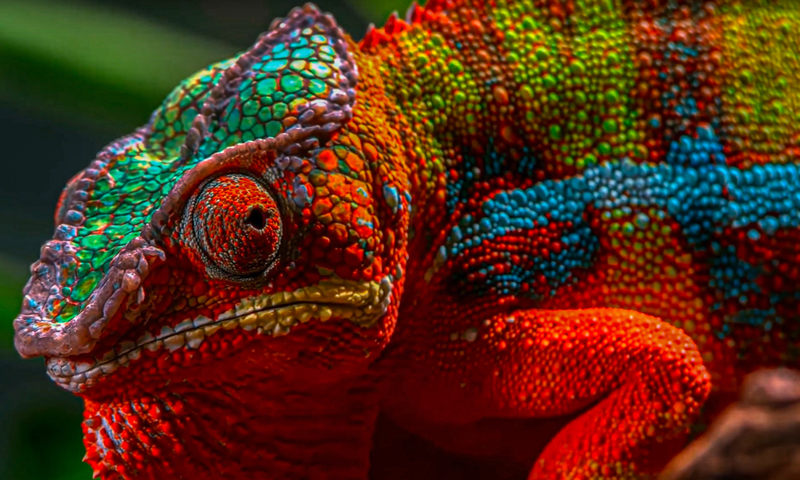
One of the most famous traits of chameleónovité is their ability to change color. Contrary to popular belief, this ability is not only for camouflage. Color changes are also used for:
- Communication with other chameleons
- Displaying dominance or submission
- Regulating body temperature
- Expressing stress or excitement
Chameleónovité change color through specialized skin cells called chromatophores. These cells reflect light differently depending on how they are structured at the microscopic level, allowing rapid and controlled color shifts.
Independently Moving Eyes
Another defining feature of chameleónovité is their eyes. Each eye can move independently, allowing a chameleon to look in two directions at the same time. This gives them nearly 360-degree vision, which is extremely useful for spotting predators and prey without moving their body.
When hunting, both eyes focus forward simultaneously, providing depth perception just before striking prey.
Prehensile Tail and Grasping Feet
Chameleónovité are built for life in trees. Their tails are prehensile, meaning they can wrap around branches for stability. Their feet are shaped like pincers, with toes fused into two opposing groups. This structure allows them to grip branches tightly, even in windy or unstable conditions.
Extendable Tongue
Perhaps one of the most impressive features of chameleónovité is their tongue. It can extend farther than the length of their own body in a fraction of a second. The tongue has a sticky tip and powerful muscles, enabling chameleons to catch insects with remarkable accuracy.
Habitat and Geographic Distribution
Chameleónovité are primarily found in:
- Africa
- Madagascar
- Southern Europe
- The Middle East
- Parts of Asia
Madagascar is especially important, as it is home to a large percentage of all chameleónovité species. The island’s isolation allowed chameleons to evolve into many distinct forms, ranging from tiny leaf-sized species to large, vividly colored ones.
Most chameleónovité prefer warm climates and are commonly found in forests, savannas, and shrublands. Some species have adapted to arid environments, while others thrive in dense rainforests.
Behavior and Lifestyle of Chameleónovité
Solitary Nature
Chameleónovité are generally solitary animals. Unlike many reptiles, they do not seek companionship and often react aggressively if another chameleon enters their territory. Visual displays, such as color changes and body inflation, are commonly used to warn rivals.
Slow and Deliberate Movement
Their movement style is slow and deliberate, often swaying gently as they walk. This rocking motion helps them blend in with leaves moving in the wind, reducing the chance of detection by predators.
Daily Activity Patterns
Most chameleónovité are diurnal, meaning they are active during the day. They rely on sunlight to regulate their body temperature and often bask in the morning before becoming more active.
Diet and Feeding Habits
Chameleónovité are primarily insectivores. Their diet typically includes:
- Crickets
- Grasshoppers
- Flies
- Beetles
- Caterpillars
Larger species may occasionally eat small birds or reptiles, but insects remain the primary food source. Feeding is a precise process. The chameleon remains still, locks onto its prey, and launches its tongue with incredible speed and force.
Water intake is also unique. Many chameleónovité do not drink from standing water. Instead, they lick droplets from leaves after rainfall or morning dew.
Reproduction and Life Cycle
Reproduction among chameleónovité varies by species, but most follow a similar pattern.
Mating Behavior
During mating season, males become more colorful and aggressive. Bright colors signal strength and health, helping females choose suitable mates. If a female is not receptive, she may display darker or more muted colors to discourage advances.
Egg-Laying and Live Birth
Most chameleónovité lay eggs, burying them in warm soil where they incubate for several months. Some species, however, give birth to live young, an adaptation that helps survival in cooler climates.
Growth and Lifespan
Young chameleons are independent from birth and receive no parental care. Lifespan varies greatly, with smaller species living only a few years, while larger chameleónovité may live up to 10 years or more in ideal conditions.
Communication and Social Signals
Chameleónovité rely heavily on visual communication. Color, posture, and body size all convey information. A bright display may signal aggression, while darker colors can indicate stress or fear.
Hissing and subtle body movements may also be used, but chameleons are generally quiet animals. Their ability to communicate without sound helps them remain hidden from predators.
Ecological Importance of Chameleónovité
Chameleónovité play an important role in maintaining ecological balance. By controlling insect populations, they help prevent overpopulation of pests that could damage vegetation.
They also serve as prey for birds, snakes, and mammals, making them a key part of the food chain. The health of chameleónovité populations can often indicate the overall health of their ecosystem.
Conservation and Threats
Many chameleónovité species face serious threats, including:
- Habitat destruction
- Deforestation
- Climate change
- Illegal pet trade
Madagascar, in particular, has seen rapid habitat loss, putting many endemic chameleónovité species at risk. Conservation efforts focus on habitat protection, breeding programs, and stricter regulation of wildlife trade.
Public education is also essential. Understanding the importance of chameleónovité can help encourage responsible environmental practices and support conservation initiatives.
Chameleónovité and Humans
Chameleónovité have fascinated humans for centuries and appear in folklore, art, and symbolism around the world. They are often associated with adaptability, patience, and transformation.
In modern times, chameleons are sometimes kept as pets. However, chameleónovité require very specific care, including controlled temperature, humidity, lighting, and diet. Without proper knowledge, keeping them can be challenging and stressful for the animal.
Final Perspective on Chameleónovité
The family chameleónovité represents one of nature’s most remarkable examples of specialization and adaptation. From their color-changing skin to their independently moving eyes and lightning-fast tongues, every aspect of their biology is fine-tuned for survival.
Studying chameleónovité not only deepens our understanding of reptiles but also highlights the importance of biodiversity and conservation. These extraordinary creatures remind us that even the quietest animals can have the most complex and awe-inspiring lives.