
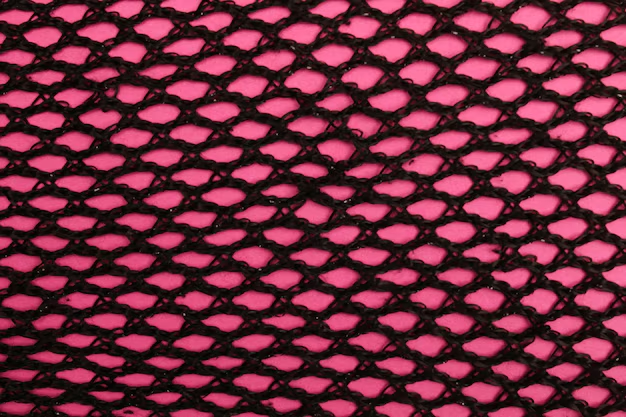
Flensutenol Texture: A Complete Guide to Understanding This Emerging Surface Trend
If you’ve recently come across the term flensutenol texture, you’re probably wondering what it means and why it’s gaining attention across digital platforms. From design communities to creative tech discussions, flensutenol texture has started appearing in conversations about materials, visual aesthetics, and innovative finishes.
In this comprehensive SEO-optimized guide, we’ll explore everything you need to know about flensutenol texture — its characteristics, applications, benefits, industries using it, and why it’s becoming a trending keyword in design and creative circles.
What Is Flensutenol Texture?
Flensutenol texture refers to a unique surface pattern characterized by a hybrid blend of smoothness and subtle granular detailing. It combines soft diffusion effects with micro-layered depth, creating a visually dynamic yet tactilely refined finish.
Unlike traditional matte, gloss, or satin finishes, flensutenol texture introduces a multi-dimensional surface profile that reacts differently depending on lighting, viewing angle, and touch. The result is a texture that feels modern, slightly organic, and visually complex without being overwhelming.
Key characteristics of flensutenol texture include:
- Fine micro-layered detailing
- Subtle gradient transitions
- Semi-soft tactile feel
- Light-reactive surface shifts
- Balanced matte-to-sheen appearance
Because of these features, flensutenol texture is increasingly discussed in interior design, digital rendering, fashion materials, and conceptual product design.
Why Is Flensutenol Texture Trending?
The rise of flensutenol texture can be linked to several current design trends:
1. Minimalism with Depth
Modern design is shifting from flat minimalism toward “textured minimalism.” Designers want surfaces that look clean but still feel rich. Flensutenol texture delivers depth without clutter.
2. Sensory-Driven Design
There’s a growing focus on tactile experience in products and spaces. Surfaces that feel distinctive but refined create emotional engagement.
3. Digital-to-Physical Aesthetic Transfer
As 3D rendering and CGI aesthetics influence physical design, textures that resemble digitally layered surfaces — like flensutenol texture — are becoming desirable in real-world materials.
Core Elements of Flensutenol Texture
Understanding flensutenol texture requires breaking it down into its defining elements.
Micro-Layering Effect
One of the most defining traits is its subtle micro-layering. Under close inspection, the surface appears to have faint, almost invisible layers that create depth without heavy patterning.
Diffused Reflectivity
Instead of sharp reflections like gloss finishes, flensutenol texture diffuses light. This means it glows softly under direct lighting but remains understated in ambient settings.
Organic-Mechanical Balance
The texture sits between industrial smoothness and natural irregularity. It doesn’t feel artificially perfect, yet it’s not rough or rustic either.
Applications of Flensutenol Texture
Flensutenol texture is versatile and can be adapted across various industries.
Interior Design
In interior spaces, flensutenol texture works beautifully on:
- Feature walls
- Decorative panels
- Cabinet finishes
- Ceiling treatments
- Sculptural installations
Designers appreciate how it adds depth without overpowering a room. It pairs well with neutral palettes like beige, charcoal, and soft taupe.
Product Design
Modern product designers use flensutenol texture to enhance:
- Tech accessories
- Premium packaging
- Consumer electronics shells
- Furniture accents
The texture helps products feel premium while avoiding excessive gloss or plastic-like finishes.
Fashion & Textiles
In fabric innovation, flensutenol texture can be interpreted through:
- Layered weaving techniques
- Subtle raised detailing
- Soft-sheen synthetic blends
It offers garments a futuristic yet wearable aesthetic.
Digital Design & 3D Rendering
In the digital world, flensutenol texture is often simulated in:
- 3D architectural visualization
- Concept art
- Game asset materials
- NFT and digital artwork surfaces
Its layered depth makes digital materials look more realistic and immersive.
Benefits of Using Flensutenol Texture
1. Visual Sophistication
It creates a refined appearance without being flashy. Perfect for modern luxury aesthetics.
2. Versatility
Works in both residential and commercial settings.
3. Light Adaptability
Because of its diffused reflectivity, it performs well under various lighting conditions.
4. Reduced Surface Imperfections Visibility
Minor scratches and marks are less noticeable compared to high-gloss finishes.
5. Emotional Appeal
Surfaces that subtly shift under light often feel more dynamic and engaging.
Flensutenol Texture vs. Other Surface Finishes
To understand flensutenol texture better, let’s compare it with common finishes:
| Texture Type | Shine Level | Depth Effect | Tactile Feel | Visual Complexity |
|---|---|---|---|---|
| Matte | Low | Minimal | Smooth | Simple |
| Gloss | High | Low | Slick | Reflective |
| Satin | Medium | Mild | Soft | Moderate |
| Flensutenol Texture | Medium-soft | High | Soft-granular | Multi-layered |
The table clearly shows that flensutenol texture stands out because of its depth and layered aesthetic rather than pure shine.
How to Incorporate Flensutenol Texture in Your Space
If you’re considering integrating flensutenol texture into your design project, here are some practical tips:
Start Small
Use it on accent pieces before applying it to large surfaces.
Pair with Natural Materials
Wood, stone, and brushed metal complement flensutenol texture beautifully.
Balance Lighting
Install soft directional lighting to highlight its depth and layered detail.
Avoid Overuse
Because it’s visually dynamic, too much can feel overwhelming. Use it strategically.
Future of Flensutenol Texture
The future of flensutenol texture looks promising, especially with the rise of:
- Smart materials
- Adaptive surfaces
- Sustainable composite finishes
- 3D-printed architectural panels
As designers continue blending digital inspiration with physical craftsmanship, textures like flensutenol are expected to become more mainstream.
Additionally, eco-conscious manufacturing methods may allow flensutenol-inspired finishes to be produced using recycled materials or bio-based polymers.
Common Questions About Flensutenol Texture
Is flensutenol texture a material or a finish?
It’s best described as a finish or surface treatment rather than a raw material.
Can it be customized?
Yes. Variations can include heavier layering, smoother diffusion, or higher reflectivity depending on application.
Is it durable?
Durability depends on the base material used. When applied to high-quality substrates, it can be quite resilient.
Does it work outdoors?
With proper sealing and weather-resistant coatings, flensutenol-style finishes can be adapted for exterior use.
Why Designers Love Flensutenol Texture
Design professionals appreciate flensutenol texture because it offers something new in a market saturated with predictable finishes. It represents:
- Innovation without excess
- Complexity without chaos
- Texture without heaviness
It aligns perfectly with contemporary preferences for subtle luxury and tactile engagement.
Final Thoughts on Flensutenol Texture
Flensutenol texture is more than just a buzzword — it represents a shift toward layered, sensory-driven design. Whether applied in interiors, products, fashion, or digital rendering, it brings depth, refinement, and subtle sophistication.