Leaderhosen: A Complete Guide to the Traditional Bavarian Outfit
When people think of Bavarian culture, Oktoberfest, or traditional German heritage, one of the first images that comes to mind is the iconic leaderhosen. This traditional garment is more than just a costume—it’s a part of cultural history, craftsmanship, and identity. Over the years, leaderhosen have evolved from durable workwear into a global fashion statement, especially popular during cultural festivals and celebrations.
If you’ve ever wondered what leaderhosen are, why they matter, how they are made, or how to style them, this guide covers everything you need to know.
What Are Leaderhosen?
The term leaderhosen refers to short or knee-length breeches traditionally made of leather. They are commonly associated with Bavaria, the Alpine regions, Austria, and parts of Switzerland. Their name originates from the German words “Leder,” meaning leather, and “Hosen,” meaning pants.
Originally designed for their durability and flexibility, leaderhosen could withstand tough physical labor, outdoor use, riding, and farm work. Today, they are strongly tied to cultural customs, folk celebrations, and festivals like Oktoberfest.
History of Leaderhosen
The history of leaderhosen dates back to the 16th and 17th centuries. Rural workers, hunters, and farmers needed strong clothing that could tolerate harsh weather and demanding physical activities. Leather became the ideal material because it lasted significantly longer than cotton or wool.
Over time, leaderhosen evolved into a cultural item rather than simply functional clothing. By the 19th century, they became a symbol of regional pride and identity in southern Germany and Austria. Nobles and royalty even began wearing leaderhosen, increasing their popularity and transforming them into a formal and festive outfit.
Types of Leaderhosen
Leaderhosen come in different variations depending on length, style, and purpose. The three most popular styles include:
1. Short Leaderhosen
These fall above the knee and are commonly worn at festivals. They’re paired with suspenders and often include embroidery reflecting family or regional symbols.
2. Knee-Length Leaderhosen
Also known as kniebundhosen, these reach just below the knee and were traditionally more popular among hunters and horse riders.
3. Long Leaderhosen
Less common today, long versions were worn during colder seasons or for specific trades requiring more leg protection.
Materials Used in Leaderhosen
Leaderhosen are primarily made from natural leather. Some of the most common materials include:
- Deerskin: Soft, high-quality, and luxurious.
- Goatskin: Durable and affordable.
- Cowhide: Thick, strong, and often used for practical purposes.
- Chamois Leather: Known for comfort and premium texture.
Leather choice affects softness, longevity, and price. Authentic leaderhosen can last for decades or even be passed down through generations.
Traditional Embroidery and Designs
One of the defining characteristics of leaderhosen is the decorative embroidery. The patterns often include:
- Alpine flowers such as Edelweiss
- Royal crests or hunting symbols
- Deer motifs
- Oak leaves or vines
- Personal initials
Embroidery shades vary from white and green to gold and brown. Each design tells a story, making every pair unique.
Accessories That Complete the Look
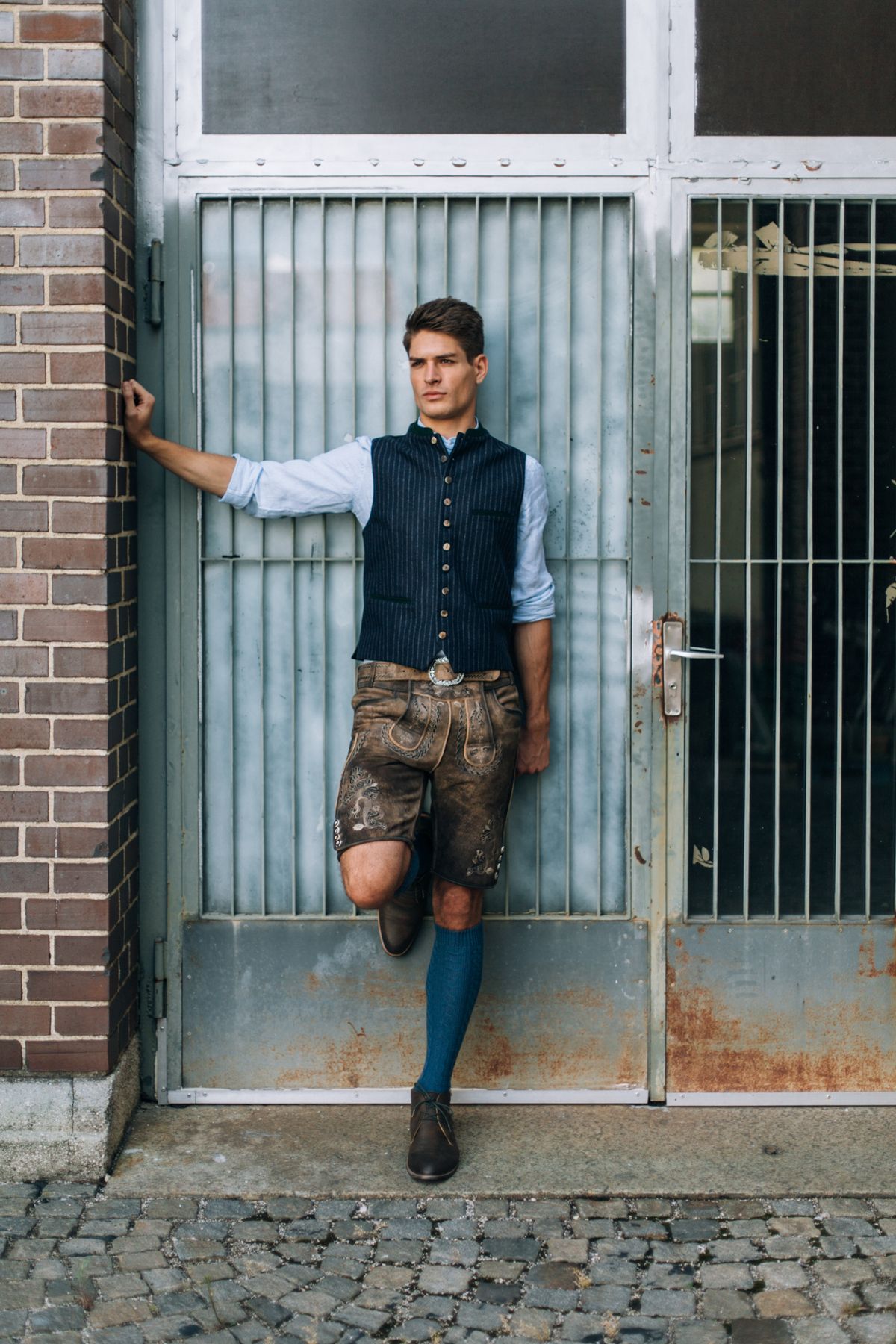
Leaderhosen are rarely worn alone. They are part of a full traditional Bavarian outfit known as Tracht, which includes several accessories:
1. Suspenders (Hosenträger)
Most leaderhosen include matching suspenders with embroidered chest pieces.
2. Shirts
Traditional shirts include:
- Checkered shirts in red, green, or blue
- White cotton or linen dress shirts
3. Shoes
Authentic footwear includes Haferlschuhe, a rugged leather shoe designed for mountain use.
4. Socks
Wool knee socks or Loferl legwarmers are worn depending on the style.
5. Hats
A Tyrolean hat with feathers or pins completes the outfit.
With the right combination, the leaderhosen look becomes both authentic and stylish.
Leaderhosen in Modern Culture
Today, leaderhosen remain a symbol of tradition but have gained popularity far beyond regional boundaries. Tourists, performers, cultural groups, and festival-goers now proudly wear them.
Oktoberfest alone has played a massive role in reviving interest in traditional clothing. Whether for costume events, cultural celebrations, or personal appreciation of heritage, leaderhosen continue to make a strong cultural impact.
Why Leaderhosen Are Still Relevant
Leaderhosen remain popular for several reasons:
- Cultural Identity: They represent tradition and pride.
- Durability: Leather lasts a long time, making leaderhosen sustainable.
- Uniqueness: Each pair tells a personal or regional story.
- Fashion Appeal: Modern variations make them stylish and comfortable.
People appreciate their craftsmanship and authenticity, making leaderhosen more than just clothing—they are a cultural legacy.
How to Care for Leaderhosen
Proper care ensures leaderhosen remain in excellent condition for years. Here are a few tips:
- Avoid machine washing.
- Use a soft brush to remove dirt.
- Keep them dry and stored away from direct sunlight.
- Leather conditioner helps maintain softness.
- Never use harsh chemicals or fabric detergents.
With regular maintenance, leaderhosen develop a natural patina that enhances their character over time.
Choosing the Right Leaderhosen
When selecting a pair, consider:
- Fit: Leaderhosen should feel snug but not tight.
- Material: Higher-quality leather improves comfort and longevity.
- Embroidery Style: Reflects personality and tradition.
- Purpose: Whether for festivals, performances, or casual wear.
Authentic details make a significant difference in appearance and feel.
Leaderhosen vs. Lederhosen: A Common Misspelling
Many people type leaderhosen when searching for the traditional outfit online. While the correct spelling in German is lederhosen, the alternate spelling is now frequently used in global discussions, searches, and online shopping. Regardless of spelling, both terms refer to the same iconic Bavarian garment.
Final Thoughts
Leaderhosen are more than just festival clothing—they are a symbol of heritage, identity, and craftsmanship. Their unique design, durability, and history make them a fascinating piece of cultural fashion that continues to attract global admiration. Whether worn for Oktoberfest, cultural events, or simply as a stylish traditional outfit, leaderhosen remain timeless.